
Just Visiting?
Solo de Visita?
Everyone is welcome!
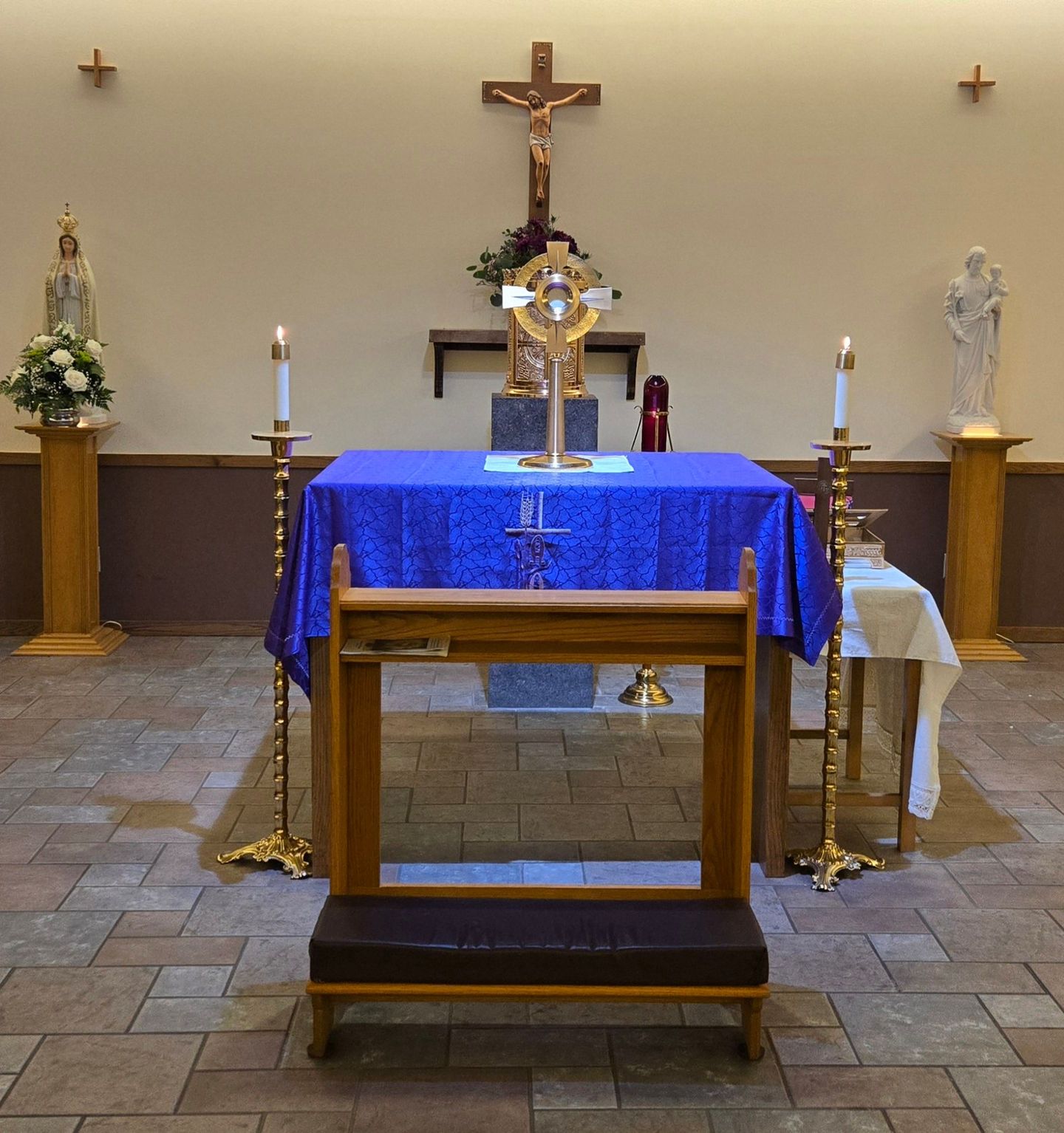
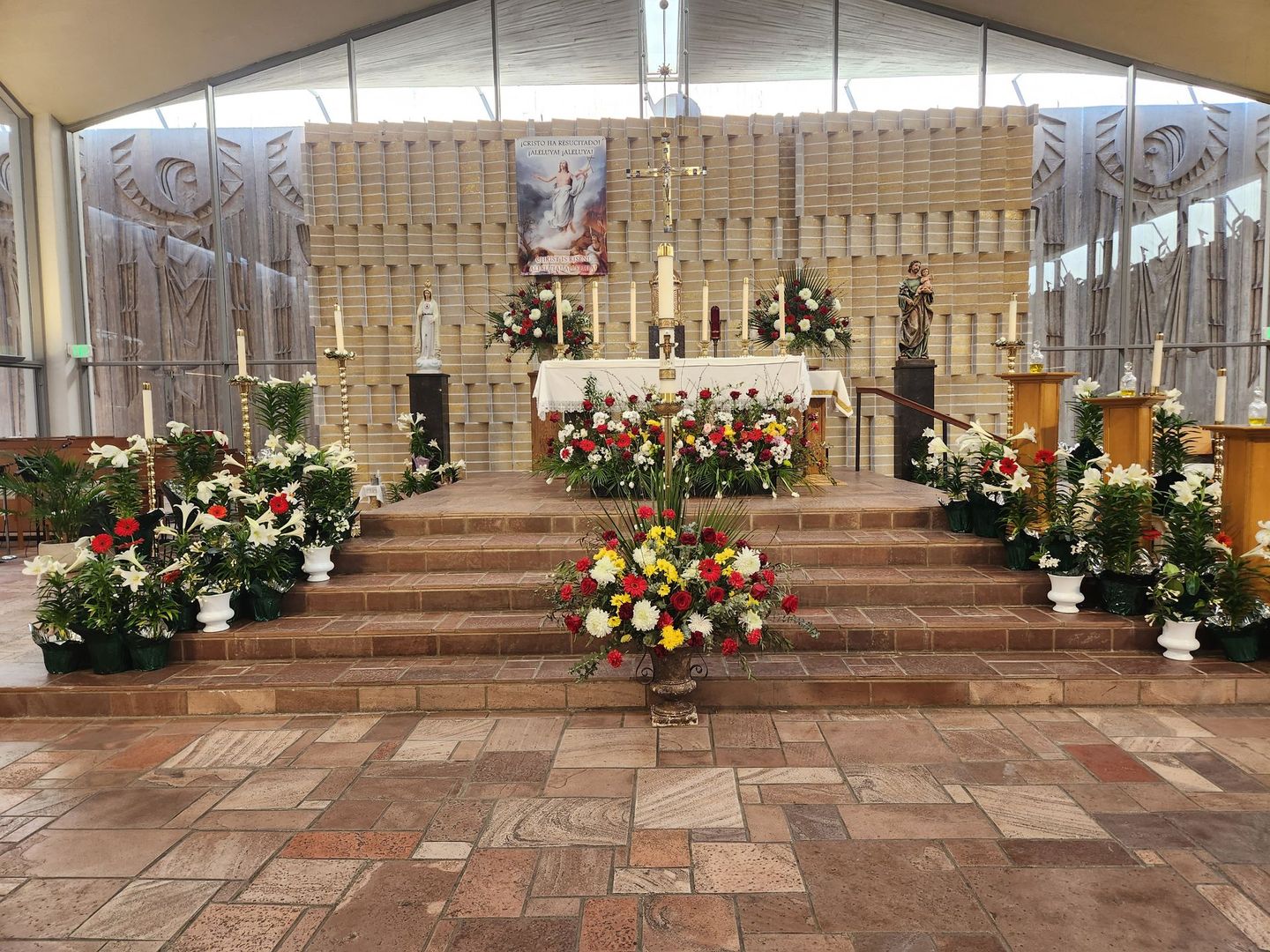
We invite you to join us for Mass, Confession, Eucharistic Adoration, and participation in our many ministries.
Todos son bienvenidos
Lo invitamos a unirse a nosotros para la Misa, la Confesión, la Adoración Eucarística y la participación en nuestros numerosos ministerios.


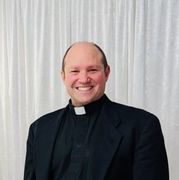
Father
Joseph H. Arledge/Padre José Arledge
From the Pastor's Heart/DESDE EL CORAZÓN DEL PASTOR
Dear Brothers and Sisters in Christ:
We are tremendously blessed to have 69 youth who received the Sacrament of Confirmation on Saturday, June 13th, by Archbishop Paul S. Coakley! What a great gift they have received! Let us pray for them, so that they will become the saints that they are called to become.
Where does the Sacrament of Confirmation come from? Before Jesus ascended into heaven, he told his disciples to wait in Jerusalem, so that they could be baptized by the Holy Spirit (cf. Acts 1:5). After having completed the First New Testament Novena (the time between Jesus’ Ascension and Pentecost), the Holy Spirit manifested Himself in the form of a strong driving wind and tongues of fire that were suspended over the Apostles’ and Disciples’ heads. By this action, the disciples understood that God was anointing them for a special mission (Acts 2).
The early Christians made sure, then, that whenever they brought people into the Church, they would baptize them with water and then anoint them with holy oil. Why holy oil? Oil had been used in the Old Testaments to anoint priests, prophets and kings. The early Christians realized that their community was “a chosen race, a royal priesthood, a holy nation” (1 Peter 2:9), and each new member was anointed with holy oil after being baptized with water.
In the early Church, the Sacraments of Baptism and Confirmation were celebrated in a single ceremony. It is still done this way in the churches of the East. However, in the Roman Catholic Church, the Church of the West, the two sacraments were gradually separated, since the Church in the West wanted the bishop to complete a person’s initiation.
As the Church grew and the bishops ministered over ever larger territories, the bishop could not be present for every Baptism. Thus, the custom of gathering groups of baptized Catholics together later began, so that the bishop could confirm them all at one time. Thus, over time, the reception of the Sacrament of the Eucharist came before the celebration of the Sacrament of Confirmation.
In our Archdiocese of Oklahoma City, a person who is in the Sixth Grade can receive the Sacrament of Confirmation, and we had 69 youth that were confirmed! Thank you, Jesus!
Receiving the Sacrament of Confirmation, the Christian’s relationship with God is made stronger. The Gifts of the Holy Spirit are strengthened: Wisdom, Understanding, Counsel, Fortitude, Knowledge, Piety, and Fear of the Lord. In this way, the Christian is equipped to become a better witness to Christ in the world. Let us pray for our newly Confirmed YOUTH to be on fire for the faith, and spread the Good News of Catholicism to the entire world!
Sincerely your Brother in Christ, Fr. Joe
Queridos hermanos y hermanas en Cristo:
¡Somos inmensamente bendecidos por tener a 69 jóvenes que recibieron el Sacramento de la Confirmación el Sábado 13 de Junio de manos del Arzobispo Paul S. Coakley! ¡Qué gran regalo han recibido! Oremos por ellos, para que lleguen a ser los santos que están llamados a ser.
¿De dónde proviene el Sacramento de la Confirmación? Antes de que Jesús ascendiera al cielo, les dijo a sus discípulos que esperaran en Jerusalén para que pudieran ser bautizados por el Espíritu Santo (cf. Hechos 1:5). Después de haber completado la primera novena del Nuevo Testamento (el tiempo entre la Ascensión de Jesús y Pentecostés), el Espíritu Santo se manifestó en forma de un fuerte viento impetuoso y lenguas de fuego suspendidas sobre las cabezas de los Apóstoles y Discípulos. Mediante esta acción, los discípulos comprendieron que Dios los estaba ungiendo para una misión especial (Hechos 2).
Los primeros cristianos se aseguraban, pues, de que siempre que incorporaban a personas a la Iglesia, las bautizaran con agua y luego las ungieran con óleo santo. ¿Por qué óleo santo? El aceite había sido utilizado en el Antiguo Testamento para ungir a sacerdotes, profetas y reyes. Los primeros cristianos comprendian que su comunidad era “un linaje elegido, un sacerdocio real, una nación santa” (1 Pedro 2:9), y cada nuevo miembro era ungido con óleo santo tras ser bautizado con agua. En la Iglesia primitiva, los Sacramentos del Bautismo y de la Confirmación se celebraban en una sola ceremonia. Todavía se hace de esta manera en las iglesias orientales. Sin embargo, en la Iglesia Católica Romana, la Iglesia de Occidente, los dos sacramentos se fueron separando gradualmente, ya que la Iglesia en Occidente deseaba que el obispo completara la iniciación de una persona.
A medida que la Iglesia crecía y los obispos ejercían su ministerio sobre territorios cada vez más extensos, el obispo no podía estar presente en cada Bautismo. Por ello, comenzó más tarde la costumbre de reunir grupos de católicos bautizados para que el obispo los confirmara a todos al mismo tiempo. Así, con el paso del tiempo, la recepción del Sacramento de la Eucaristía pasó a preceder la celebración del Sacramento de la Confirmación.
En nuestra Arquidiócesis de Oklahoma City, una persona que cursa el sexto grado puede recibir el Sacramento de la Confirmación, ¡y tuvimos a 69 jóvenes que fueron confirmados! ¡Gracias, Jesús!
Al recibir el Sacramento de la Confirmación, se fortalece la relación del cristiano con Dios. Se robustecen los dones del Espíritu Santo: Sabiduría, Entendimiento, Consejo, Fortaleza, Ciencia, Piedad y Temor de Dios. De esta manera, el cristiano queda capacitado para ser un mejor testigo de Cristo en el mundo. ¡Oremos para que nuestros jóvenes recién confirmados ardan de fervor por la fe y difundan la Buena Nueva del catolicismo por todo el mundo!
Sinceramente, su hermano en Cristo, Padre José
CONSTRUCTION FUND UPDATE
The second collection for the Construction Fund will take place on the second and fourth weekends of each month. These collections will help cover the costs of the rectory bathroom, the remodeling of the parish kitchen, and the Parish Hall and its bathrooms. As of May 24, 2026, we have raised a total of $104,972.58. We thank everyone for your generosity and continued support.
ACTUALIZACIÓN DEL FONDO DE CONSTRUCCIÓN:
La segunda colecta para el Fondo de Construcción se llevará a cabo durante el fin de semana del 13 y 14 de Junio del 2026. Esta colecta ayudará a cubrir los costos del baño de la rectoría, la renovación de la cocina parroquial, así como del Salón Parroquial y sus baños. Hasta la fecha, hemos recaudado un total de $104,972.58. Agradecemos a todos su generosidad y continuo apoyo.